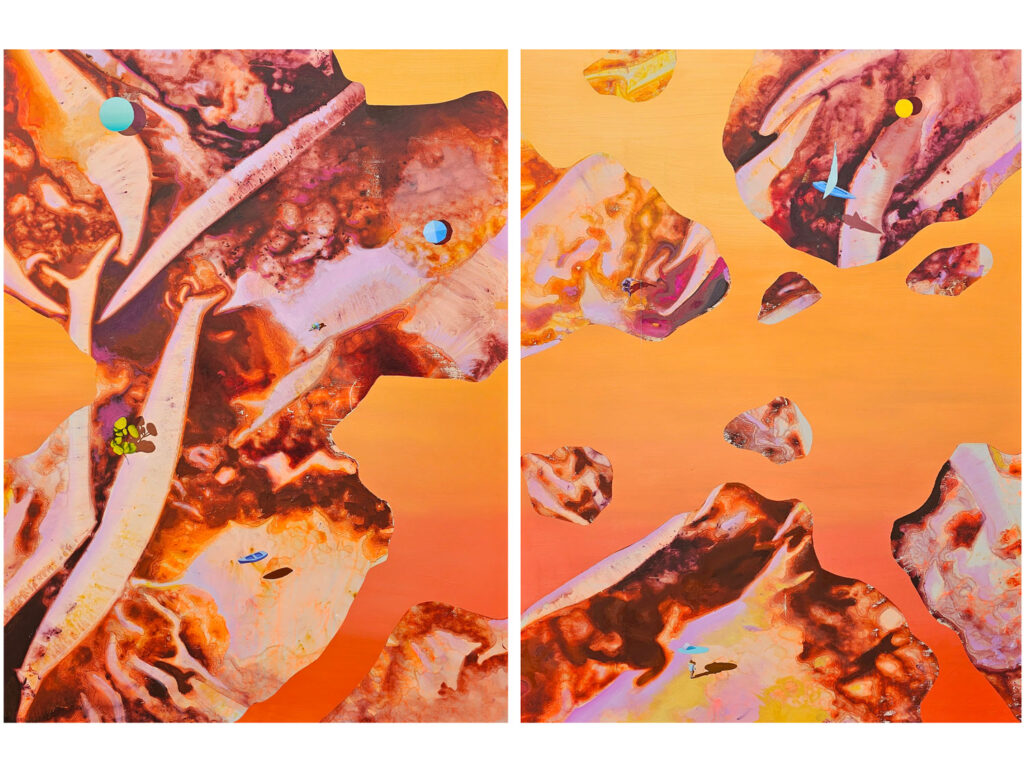
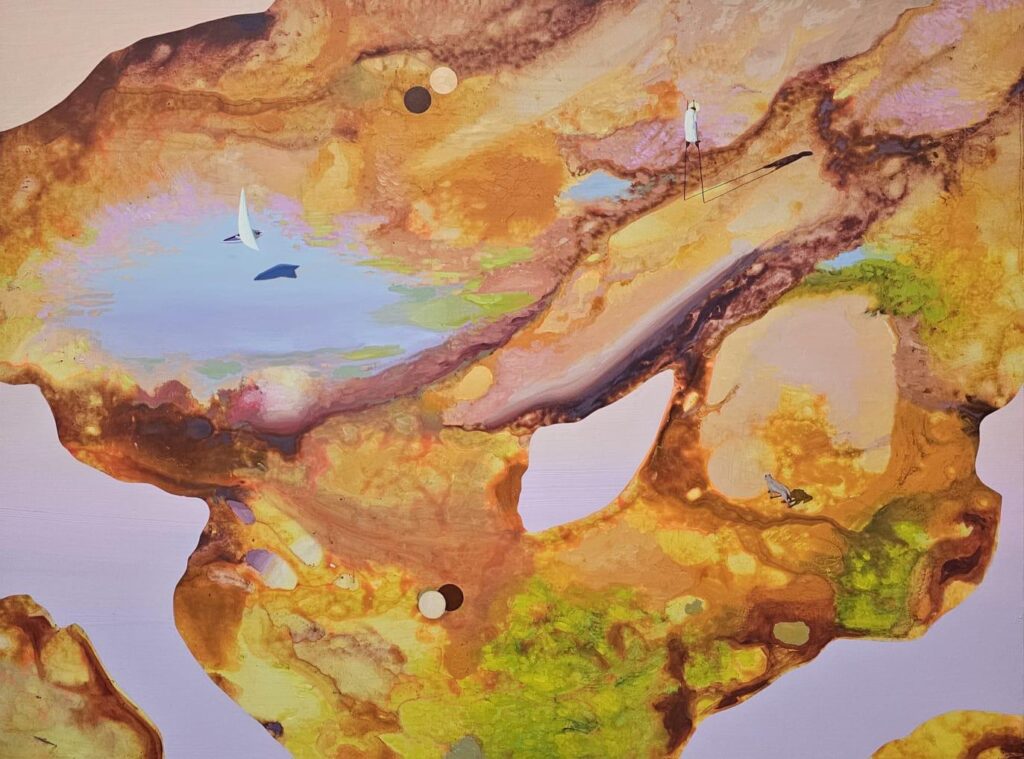
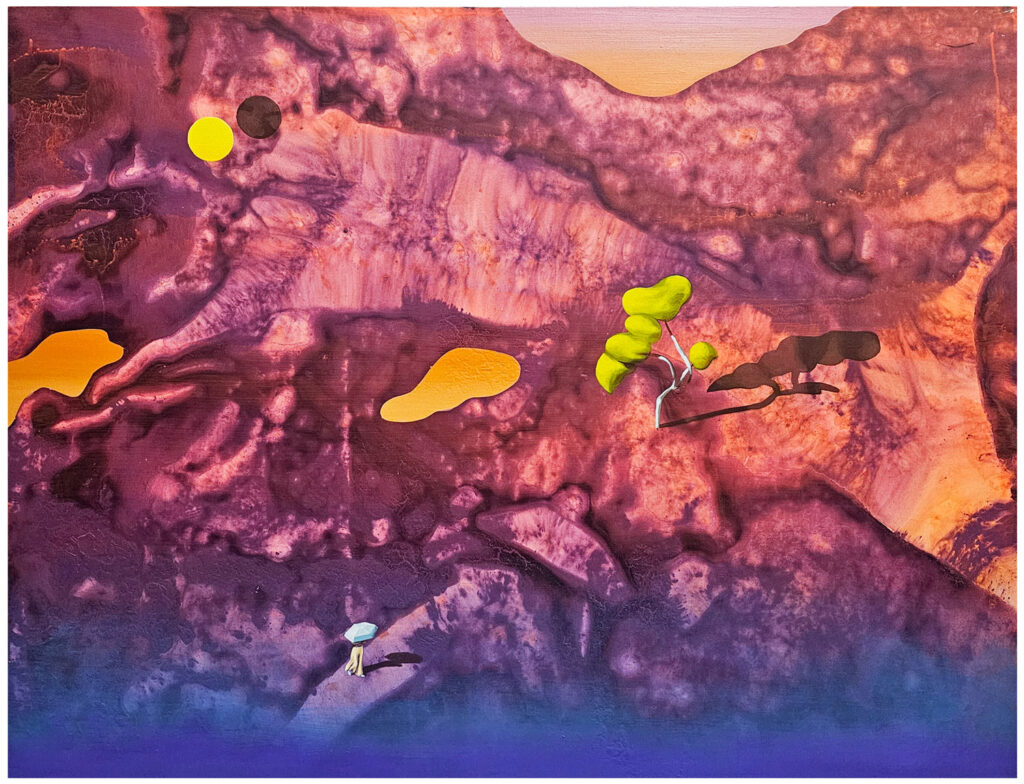
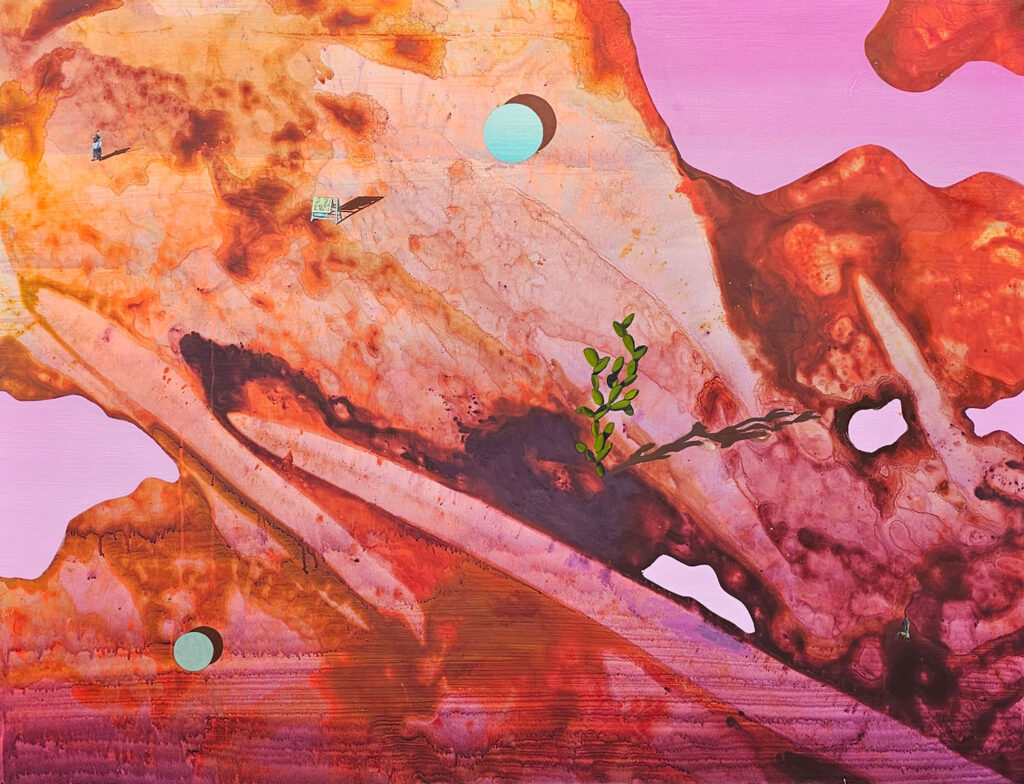
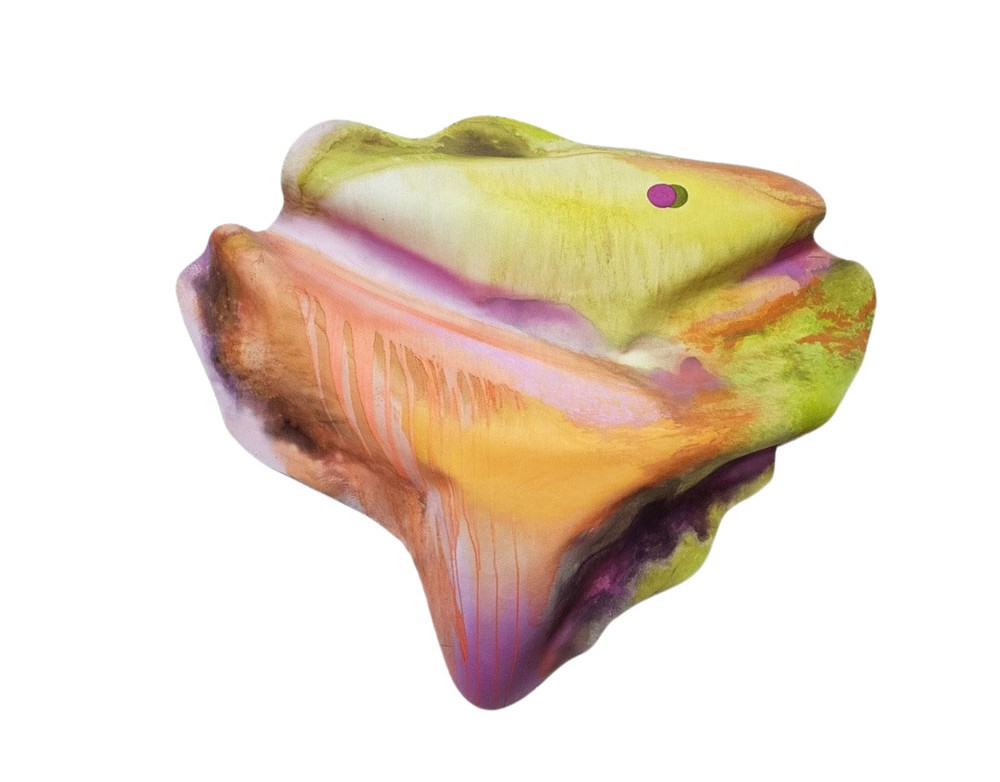
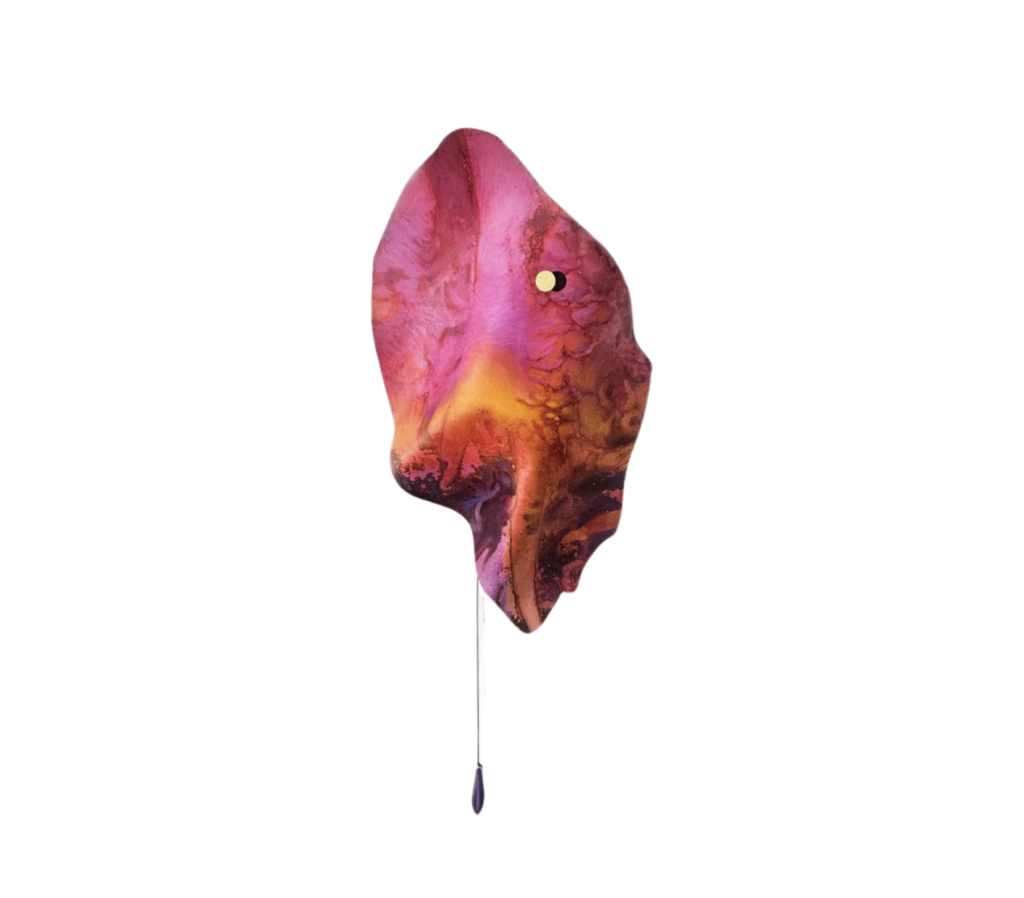
Shadow comes first. Long before colour, long before a figure takes shape, it is what Béchir Boussandel lays down on the canvas, an opening move whose direction is not yet known. Everything that follows, the warmth of the ochres, the density of the reds, the silhouettes that flicker without ever quite settling, grows out of it. L’ombre du soleil does not depict a landscape once crossed. It shows its reverse side: that of a sun too bright to be looked at directly, whose force can only be measured by what it casts on the ground.
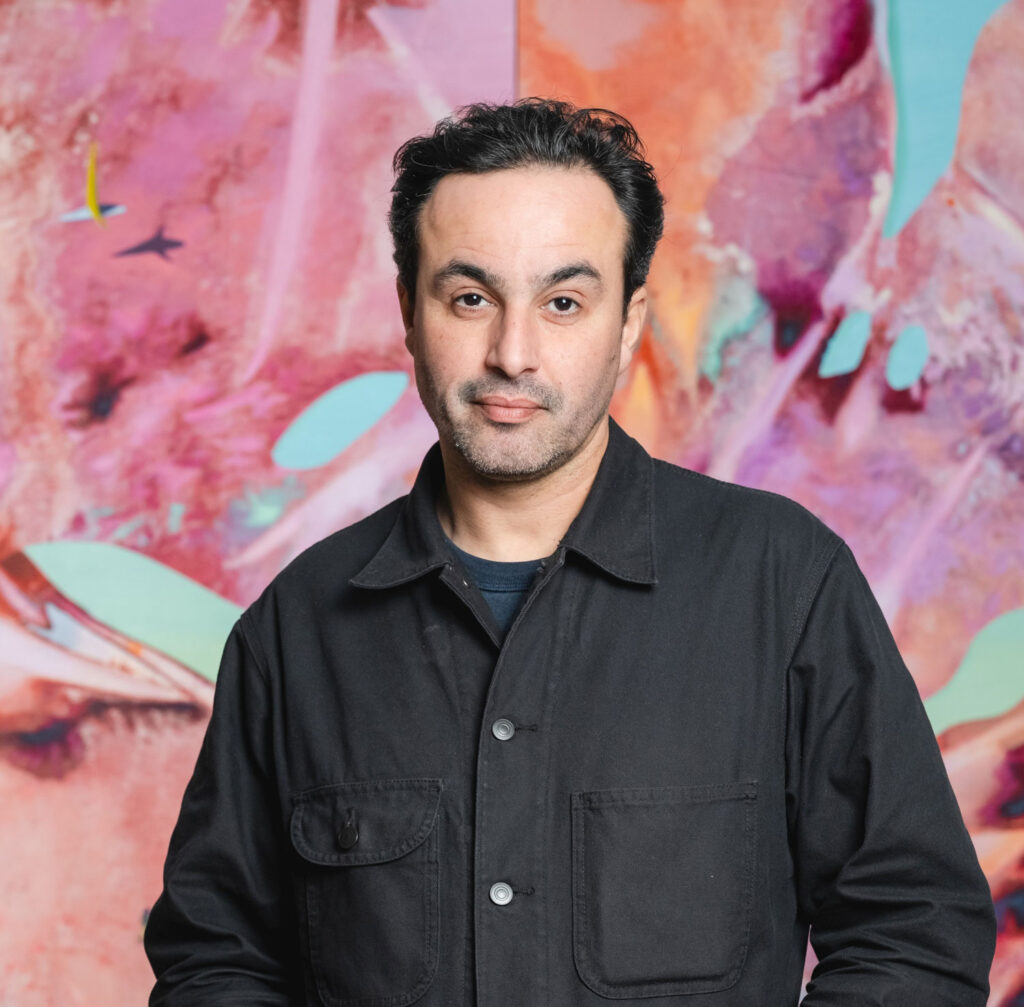
Born in Lille in 1984 and trained at the École des Beaux-Arts de Dunkerque, Boussandel grew up between Tunisia and France, never fully settled in either. Bizerte, where his family has long kept a house, shaped his childhood summers and remains a wellspring he continues to draw from. He now lives and works in Tunis, where his studio is based. As a child in Bizerte, he began soaking his canvases on the rooftop, exposing them to wind and dust before returning to them in the studio, building up oil in successive layers. In his hands, a painting is never entirely the work of one author. It is shaped as much by climate, by waiting, by what escapes his control as by what he masters.
This method runs through the way he treats the horizon, or rather does away with it. Boussandel often paints as though seen from above, so that sky and earth dissolve into a single molten surface. His broad fields of colour, scorched ochres, mineral reds, blinding whites, do not describe a specific place. They register its temperature, its dryness, the shimmer of midday air. What emerges is not a desert one could locate on a map, but the experience of one, where every border loses its certainty.
From this incandescent ground, anonymous figures surface intermittently, tools, ordinary objects, rimmed with cast shadows that root them to the ground even as they set them apart. Stripped of anything that would identify them, these figures become quiet protagonists in a larger narrative of displacement, crossing, and survival in landscapes that offer no ease. Boussandel never slips into anecdote: he raises these fragile presences to the register of a contemporary still life, one whose reach extends well beyond the North African territory that gave rise to it.
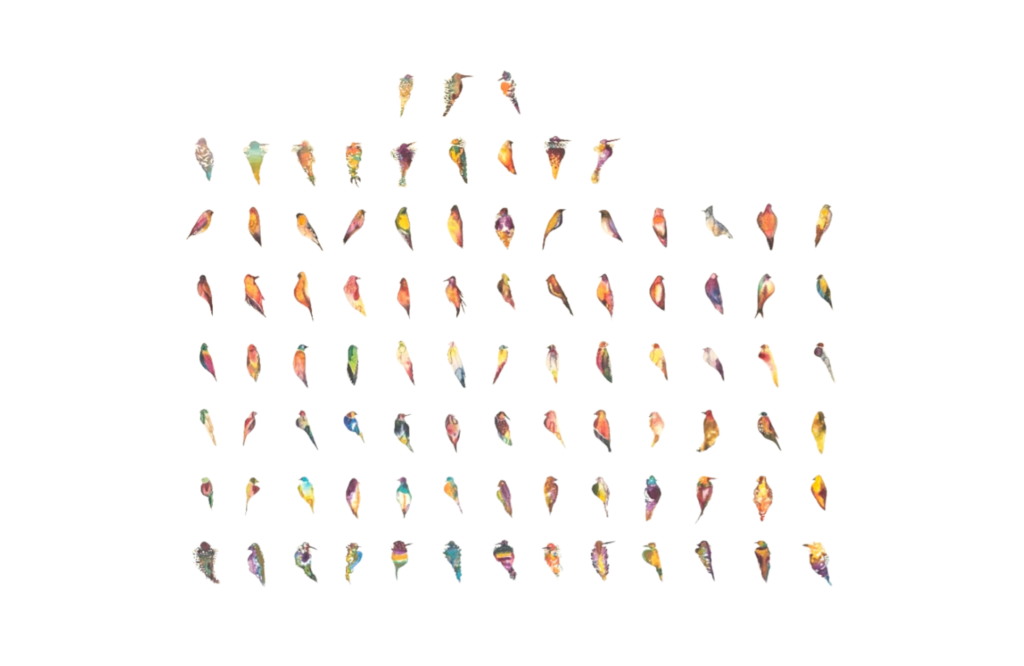
This waiting continues in three sculptures at the heart of the exhibition, standing men, their bodies tilted slightly as though leaning against a wall that is no longer there. It is a posture familiar from roadsides across the Maghreb, men standing in the heat, patient without knowing for how long or toward what. By removing the wall, Boussandel shifts the scene from documentary observation into something else: these figures hold themselves upright by their own balance alone, suspended in the gallery as they are suspended in their lives. Alongside them, a series of bird watercolours introduces a lighter register, almost a counterpoint, a reminder that displacement is not a condition unique to human beings, that there exists another, older scale of travel, one that knows neither papers nor borders.
With L’ombre du soleil, TRIBE Gallery continues a conversation begun at its founding: one that treats identity and memory as shifting territories rather than fixed belongings.